

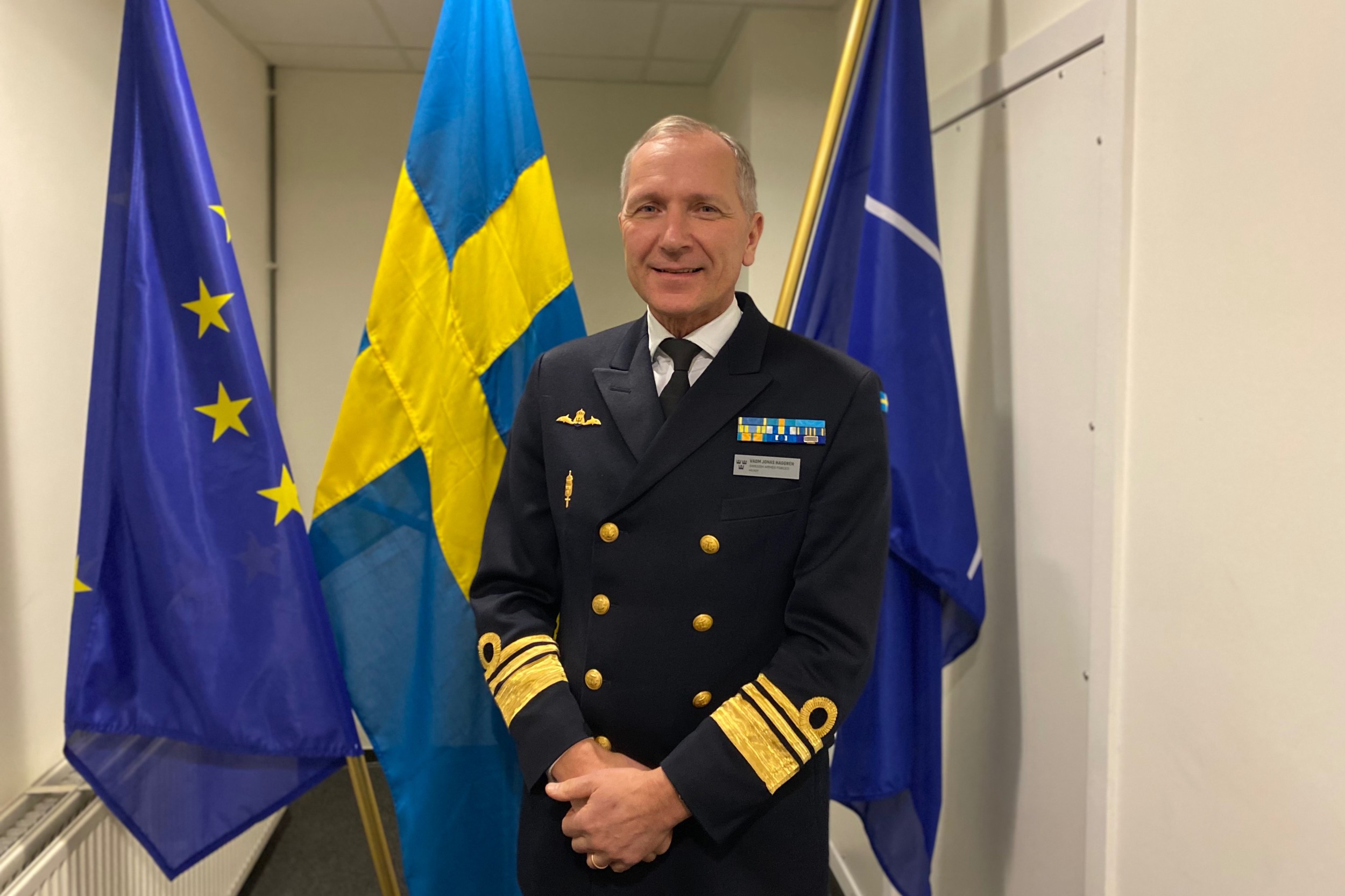
We are now leaving 2023 behind us, an intense year in which, regrettably, several wars and conflicts have been and continue to be at the forefront. I wish I could say that 2024 will be the year when everything turns around, but if there is one thing we have learned in recent years, it is that what we considered the worst conceivable scenario in a chain of events has, unfortunately, become reality. I am thinking above all of the ongoing war in Ukraine and the situation in the Middle East. In 2024, various elections will also take place that bring considerable uncertainty for the future, including the presidential election in the United States.
From something dark and tragic, something positive nevertheless emerges, and that is the unity and strength that Sweden, together with other nations, has demonstrated. It is that same unity that has led to a Swedish NATO application. It is a historic event that Sweden, which for several hundred years has maintained its policy of non-alignment, has now chosen to become part of an alliance. When I reflect on the reasons behind the application, I feel both saddened and angry, but this is the path we must take.
I will be completely honest: I did not believe that during my military career I would witness a Swedish NATO application. For many years, it was simply not a question on the table. At the same time, the Swedish Armed Forces (Försvarsmakten) have for many years maintained that the security situation in our surrounding world is uncertain and that deterioration can occur rapidly, something we have had to take into account with regard to our own military capability. We have therefore maintained a mindset in which we must be prepared for anything, but I did not at that time foresee a war in Europe or NATO membership.
On the subject of NATO membership: will Sweden become a member of the alliance, why is it taking so long, do we have too little to offer militarily, could we not simply remain a partner as before, and why are I and the NATO Delegation in Brussels (Belgium) here if we are not yet members? These are questions I am frequently asked. I can understand why people ask them. It has in fact been well over a year since Sweden submitted its membership application, and I myself was fairly prepared for my work as Sweden's Military Representative to NATO and the EU in Brussels to take place under the NATO flag.
For me, however, the answers to these questions are straightforward. The membership process itself is a political one and must be allowed to run its course. I would argue that our geographic position and our expertise across the land, air, and maritime domains in our region are unique. In terms of our contribution from a military perspective, we have a great deal to offer. Even before the war in Europe, the Swedish Armed Forces had begun what we call our growth process, with the mission of increasing our military capability. This work, already under way, will serve us well within the alliance. We have a well-functioning defence planning structure that can be integrated into NATO's defence planning with relative ease.
We have also made significant progress in developing our Total Defence (Totalförsvar), a comprehensive concept encompassing both military and civil preparedness, and there is considerable interest from other alliance members in pursuing a similar development to what Sweden is undertaking.
Throughout this growth and development process, we must at the same time remember that we started from a relatively low baseline, coming from a period of multi-year reductions in both the defence sector and Total Defence. Notwithstanding that, my view is that we have capabilities that count, and I would argue that our greatest contribution is our competent and loyal personnel.
The NATO Delegation in Brussels has played an important role in the relationship between Sweden and NATO since the late 1990s. The work here at the NATO Delegation has naturally intensified since our application. The delegation consists of a political, a defence, and a military section, all led by the Swedish Ambassador. Together, we shape and manage the Swedish position on the issues that NATO discusses ahead of the decisions the alliance takes. My role is to bring forward the military perspective and logic in these matters. For the time being, we do not yet participate in decision-making, but it is important to me that we are already making our presence felt and engaging actively on all issues. I have the impression that our views are taken very seriously, which is also a result of our long-standing cooperation.
I began with a few words about ongoing conflicts, and I would also like to close with some reflections on the security situation.
Despite our efforts and those of the entire Western world to create stability and security, the outlook remains bleak. It is easy to fall into a sense of resignation and feel that all our efforts to find lasting solutions to conflicts have been in vain, and to stop striving forward as a result. For me, it is important that we do not become trapped in pessimism and lose faith in what we are doing. However hopeless the situation may feel, I believe it is more important than ever that we, together with NATO and other partners, continue our work. We must never lose faith or hope in what we are doing. Both Sweden and NATO have become stronger than ever. We have a shared responsibility, and it is one we must live up to.
Vice Admiral Jonas Haggren